تازہ ترین ویڈیوز
Our state can set an example by removing vat on fuel and have the lowest fuel price in India
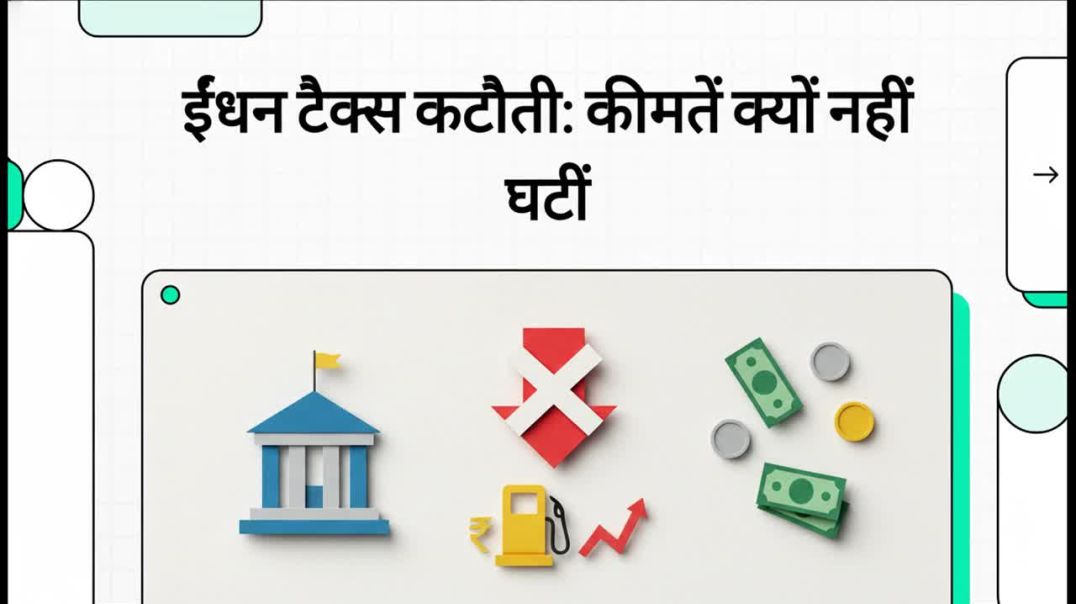
ईंधन टैक्स कटौती कीमतें क्यों नहीं घटीं
Monsoon 2015 Hindi Movie tells the compelling story of a 15-year-old boy who falls in love with a 28-year-old widow, whose husband was a forest officer who died on duty. This poignant drama explores the complexities of an unconventional romance and the challenges faced by its characters. Discover a heartfelt narrative about love, loss, and unexpected connections.<br /><br />hindi-movie drama romance 2015-film indian-cinema love-story widow teenage-love<br /><br />#Monsoon2015 #HindiMovie #FullMovie #IndianDrama
Axone 2019 Hindi Movie follows a vibrant group of girlfriends from Assam and Meghalaya as they navigate the bustling back streets of Delhi. Their mission: to throw a secret wedding party for a beloved friend. This heartwarming drama explores themes of friendship, cultural identity, and the challenges faced by North-Eastern communities in a big city.<br /><br />axone hindi-movie indian-film drama comedy friendship wedding delhi<br /><br />#AxoneMovie #HindiFilm #FullMovie #IndianCinema
Immerse yourself in the compelling drama of 'Kanwar 2023 Hindi', a film that explores the intricate dance between sin and morality amidst the fervent Kanwar pilgrimage. Follow a group of boys as they navigate a chaotic world, pushing the boundaries between right and wrong. This thought-provoking movie offers a unique glimpse into a spiritual journey fraught with moral challenges.<br /><br />kanwar pilgrimage hindi-film drama morality social-commentary indian-cinema 2023-movie<br /><br />#Kanwar2023Hindi #FullMovie #IndianCinema #DramaFilm
Mrigja 2022 Hindi is a dark comedy film that delves into the untold struggles of aspiring individuals who arrive in Mumbai with dreams of joining the bustling film industry. It portrays their challenging journeys and experiences across various departments, offering a unique perspective on their pursuit of success. Discover the humorous yet poignant realities of Bollywood hopefuls in this compelling cinematic experience.<br /><br />mrigja hindi-film 2022-movie dark-comedy bollywood mumbai-film-industry struggle drama<br /><br />#Mrigja #HindiMovie #DarkComedy #FullMovie
Dive into the intense psychological drama Amaris 2022 Hindi, where Vikram's obsessive fixation on his girlfriend's loyalty pushes him to the brink of sanity. This gripping film explores the dark side of relationships and the blurred lines of obsession. Witness the suspense unfold as Vikram's actions take an unpredictable turn.<br /><br />psychological-thriller drama suspense hindi-movie indian-cinema 2022-film obsession loyalty<br /><br />#AmarisFullMovie #HindiFilm #PsychologicalThriller #NewRelease
Director: Akbar Shifas<br /><br />Language: Malayalam<br /><br />Cast & Crew Harikrishnan,Viviya Santh<br />
New Tamil Movie Ronth (2025) Full Movie Hindi South Indian full Movie Hindi Dubbed
bhakshak, <br />movie bhakshak, <br />bhakshak story, <br />bhakshak review, <br />bhakshak imdb, <br />bhakshak netflix, <br />bhakshak 2024, <br />bhakshak download, <br />bhakshak real story, <br />bhakshak movie download, <br />bhakshak meaning, <br />bhakshak ott, <br />bhakshak cast, <br />bhakshak movie review, <br />muzaffarpur, <br />bhakshak release date, <br />guntur kaaram, <br />bhakshak true story, <br />bhakshak movie story, <br />bhakshak rating, <br />bhumi pednekar bhakshak, <br />bhumi pednekar, <br />muzaffarpur shelter case, <br />bhakshak based on, <br />dunki, <br /><br /><br />bhakshak story, <br />bhakshak review, <br />bhakshak netflix, <br />bhakshak 2024, <br />bhakshak download, <br />bhakshak real story, <br />bhakshak movie download, <br />bhakshak ott, <br />bhakshak movie review, <br />guntur kaaram, <br />bhakshak true story, <br />bhakshak movie story, <br />bhakshak rating, <br />muzaffarpur shelter case, <br />bhakshak based on, <br />dunki, <br />bhakshak full movie, <br />captain miller, <br />bhakshak imdb rating, <br />murder mubarak, <br />teri baaton mein aisa, <br />bhakshak movie real story, <br />khufiya, <br />bhakshak is real story, <br />bhakshak reviews, <br />bhakshak full movie,bhakshak movie,bhakshak movie full,bhakshak movie review in hindi,bhakshak movie review,bhakshak movie explained in hindi,bhakshak bhumi pednekar,bhakshak movie download link,bhakshak movie ott platform,bhakshak movie climax scene,bhakshak bhumi pednekar and aditya srivastava movie,bhumi pednekar new movie,bollywood new movie,south new movie in hindi,bhakshak trailer,bhakshak real story ,bhakshak,bhakshak movie,bhakshak trailer,bhakshak new movie,bhakshak bhumi pednekar,bhakshak movie review,bhakshak netflix,bhakshak real story,bhakshak movie real story,bhakshak film release date bhumi pednekar sanjay mishra,bhakshak teaser,bhakshak movie trailer,bhakshak review,bhakshak full movie,bhakshak netflix trailer,shah rukh khan bhakshak,bhakshak sharukh khan and bhumi pednekar,bhakshak real life journalist story,bhakshak real life story , <br />Bhakshak Full Movie In Hindi,Bhakshak Explained In Hindi,Bhakshak Movie,Bhakshak Full Movie Review,Bhakshak Netflix,Bhakshak Bhumi Pednekar,Bhumi Pednekar New Movie,bhakshak new movie,bhakshak new srk movie,bhakshak,bhakshak sharukh khan and bhumi pednekar new movie,bhakshak movie,bhakshak movie star cast,bhakshak movie first look,bhakshak movie release date,bhakshak 2024 movie,bhakshak story,bhakshak movie story,bhakshak hindi,bhakshak full movie explained
Experience relentless, mind-numbing horror with the 2020 Hindi film, Cookie. This chilling movie promises a terrifying journey into psychological dread, perfect for fans of intense and unsettling cinema. Prepare for a truly unforgettable and horrifying viewing experience.<br /><br />horror hindi-movie 2020-film psychological-horror thriller indian-cinema full-movie cookie-2020-hindi-movie<br /><br />#CookieMovie #HindiHorror #FullMovie #MindNumbingHorror
Explore the complexities of the human mind in 'Hemlock (2023) Hindi Movie'. This compelling drama delves into a wide range of conditions affecting mood, thinking, and behavior, offering a profound look at psychological challenges. Discover a thought-provoking narrative that resonates with contemporary issues.<br /><br />hemlock 2023 hindi-movie drama psychological indian-cinema mental-health hemlock-2023-hindi-movie<br /><br />#HemlockMovie #HindiFilm #FullMovie #PsychologicalDrama
BlackDiamond movie [Full Movie] [Full Storyline]Full EP - Full

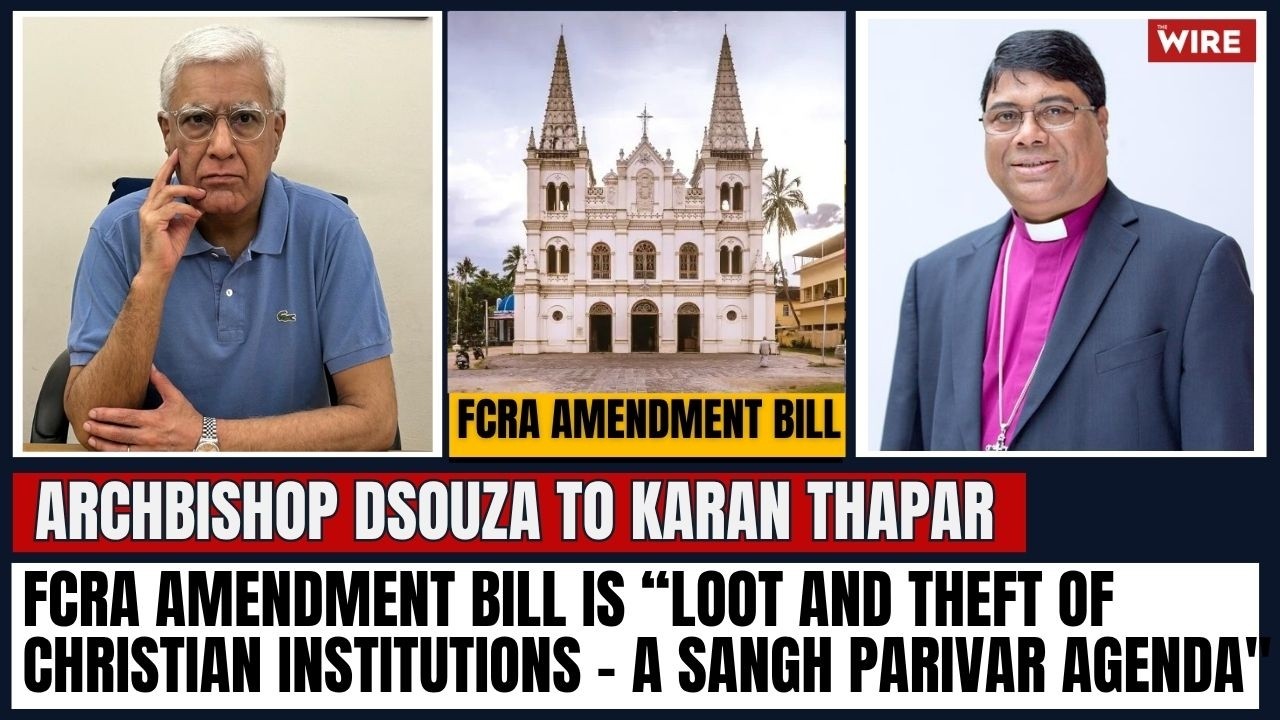
FCRA Amendment Bill is "loot and theft of Christian institutions - a Sangh Parivar agenda": Archbishop Joseph Dsouza, President, All India Christian Council, to Karan Thapar for The Wire.
.........................................
The President of the All India Christian Council and Primate of the Good Shepherd Church of India, Archbishop Joseph Dsouza, has called the government’s proposed amendments to the FCRA Act, which was yesterday, at the last moment, deferred to the next session of parliament, “loot and theft of Christian institutions and their property”. He says this is “a Sangh Parivar agenda”. If passed in the next session of parliament, he says it will create an international storm with serious international repercussions for India.
Archbishop Dsouza said: “This is a straight forward loot and theft of the Christian institutions and their properties through a legal amendment of a bill. Just as Prime Minister Manmohan Singh said years ago demonetization was organized loot and plunder, I say if this law is passed this will be the legalized loot of the Indian Christian community and the global Christian community.”
Archbishop Dsouza said: “This is a direct assault on minority rights. We have our right to create institutions, own institutions and when we have already registered as societies, trusts, companies there is other apparatus that if we are doing something foul they can come in. So why are they creating this? I personally believe, and I say this very carefully, this is by stealth a Sangh Parivar agenda to grab Christian institutions of the nation.”
Archbishop Dsouza urged the Home Minister and the Prime Minister to drop the bill altogether. He said: “I would urge through this interview and through you, we are the friends of India, we are the friends of Hindu, I would urge the Home Minister, I would urge the Prime Minister, to do everything in your power to withdraw this bill.”
I am only giving you the headline aspects of the interview. The Archbishop speaks at length about how the Christian church and its properties, hospitals, orphanages, schools would be adversely affected. He also speaks at length about the international repercussions to this bill, particularly in the United States. I think its worth your while hearing him directly. He makes points that many may not have appreciated.
Now a word about the Foreign Contribution Amendment Bill. It creates a designated authority with powers to take permanent control of the foreign contributions and assets of any organization whose foreign contribution registration is cancelled, surrendered or lapses. In turn, the designated authority can transfer those assets and properties to any ministry, department or agency of the central, state or local governments or dispose of them through sale with the proceeds credited to the Consolidated Fund of India. This means that the amendment bill gives the government the power to take over other peoples’ property and do with it as they please.
Join The Wire's Youtube Membership and get exclusive content, member-only emojis, live interaction with The Wire's founders, editors and reporters and much more. Memberships to The Wire Crew start at Rs 89/month. https://www.youtube.com/channe....l/UChWtJey46brNr7qHQ

Iran war will be remembered as Trump's big mistake, "a grave grave miscalculation": Shyam Saran, former Foreign Secretary, to Karan Thapar for The Wire.
.........................................
In a comprehensive interview which covers many aspects of the Middle East war, India’s former Foreign Secretary, Shyam Saran, says that the present Middle East war will be remembered as Trump’s big mistake. He called it “a grave grave miscalculation”. He called it “a grievous blow to the United States and it will take a long time for the United States to recover from this.”
In the interview, Mr. Saran says that he would not preclude the possibility that Trump might seek to bomb Iran back to the stone age. He made this point two-three times. “It is within the capacity of the United States really to bomb Iran back to the stone age. That capability does exist … I cannot see any good outcomes coming out of this … I would not preclude that possibility because the manner in which the United States has been behaving under Mr. Trump seems to be actually rejecting any humanitarian constraint, rejecting any kind of international law governing this conflict which is taking place. Essentially, they have been saying we don’t observe any rules at all. So if you are not ready to observe any rules at all and you have this kind of a macho kind of approach that we can completely destroy you and annihilate you, if that is the frame of mind in which you are looking at this who knows this could actually be the outcome.”
Mr. Saran also said that the world could face a global recession with serious international implications. He said: “What you are certainly going to see – as you are beginning to see already – there is a global outcome, an adverse outcome to this war, whether it is in terms of energy security, whether it is in terms of food security, whether it is in terms of what is happening to the financial markets … so across the world, particularly amongst countries which are the most vulnerable, the impact has already been seen … it may remain a regional war in terms of being the theatre of the war but it’s a global war because the impact of this war is across the whole world … so you are really looking at a global recession. There is no other word for it. There is a global recession which is staring us in the face and you may have a global recession which is combined with inflation.” This would be stagflation i.e. stagnation and inflation together.
Join The Wire's Youtube Membership and get exclusive content, member-only emojis, live interaction with The Wire's founders, editors and reporters and much more. Memberships to The Wire Crew start at Rs 89/month. https://www.youtube.com/channe....l/UChWtJey46brNr7qHQ

Half a month of Operation Epic Fury and things are getting from bad to worse.
What does Pentagon's decision to send a US Forces into the Middle East mean? Why is USA suffering so many losses (in a a war that it has supposedly already won?)
Will the war get more dirty from here on? - on Saturday Night Livestream talking about the latest developments in Iran and taking your questions about our previous episodes and the war in general. Do listen in!
🇮🇳 SUBSCRIBE FOR MORE VIDEOS 🇮🇳 - https://www.youtube.com/thedeshbhakt ▶️
⛔️ BECOME AN ANNUAL DESHBHAKT MEMBER - https://www.patreon.com/thedeshbhakt ⛔️
Unlock MEMBER ONLY: 1) Chats 2) Discord Server 3) Special Episodes
OR
Join this channel on You Tube to get access to perks:
https://www.youtube.com/channe....l/UCmTM_hPCeckqN3cPW
👕 DESHBHAKT MERCH - India's First Line of Socially & Politically aware tees 👕
https://kadakmerch.com/collections/thedeshbhakt
📧 BUSINESS ENQUIRIES - contact (at) thedeshbhakt (dot) in 📧
*** SUBSCRIBE / FOLLOW US ***
YouTube: - https://youtube.com/thedeshbhakt
Twitter :- https://twitter.com/thedeshbhakt
Instagram :- https://instagram.com/akashbanerjee.in
Facebook :- https://www.facebook.com/akashbanerjee.in
#usiran #iranattack #israeliranwar
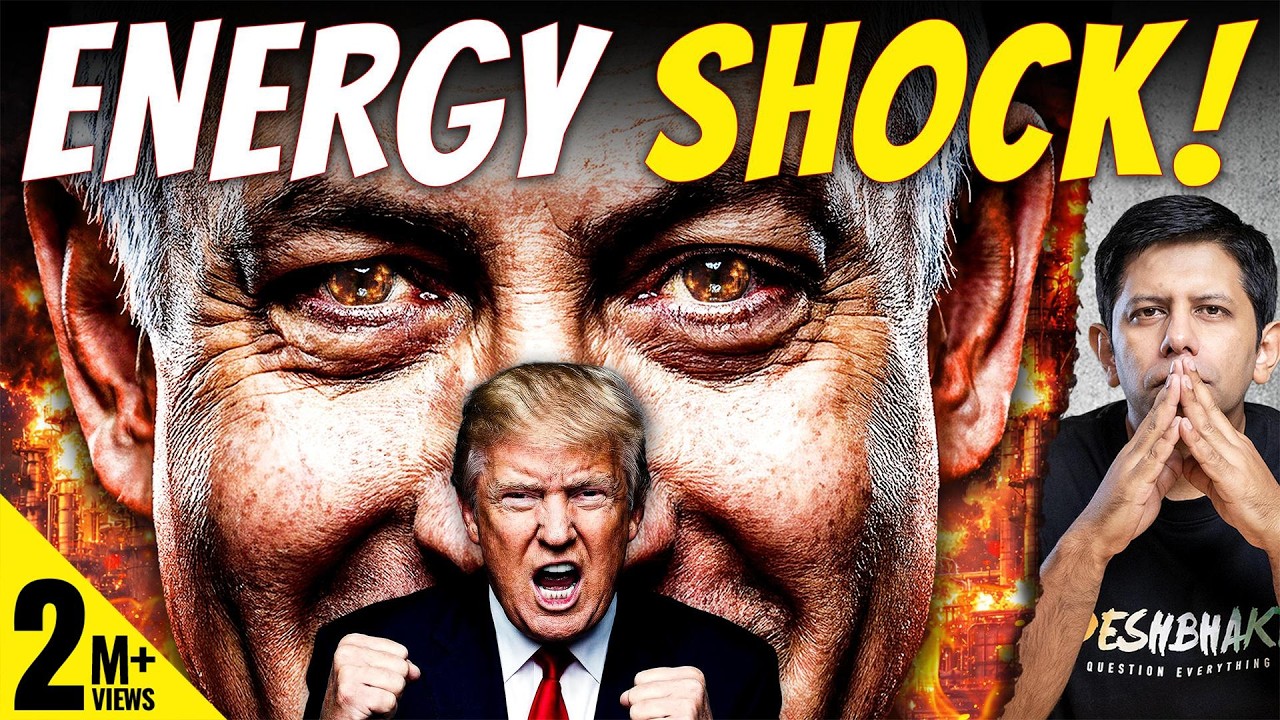
Support Our Work - Become a Deshbhakt Member & Get Exclusive Access Via The YT Join Button or https://www.patreon.com/thedeshbhakt
US-Israel and Iran Was has entered the most dangerous phase in the last 24 hours. This is war with a global fallout - for YEARS.
Despite repeated warnings - US and Israel struck Iran’s energy infrastructure including the South Pars gas field - the largest in the world.
Iran has now retaliated across the Gulf, targeting key energy facilities in Qatar, Saudi Arabia, Kuwait and the UAE, marking a major escalation that could reshape the global economy for years to come. Global Gas prices are spiking and there is no going back for years.
In this episode of The Deshbhakt we break down why attacks on gas fields like South Pars is a turning point. How is this triggering a global price shock impacting Europe and India? Is a diplomatic exit still possible or is the war spiralling out of control? And is the apparent rift between Donald Trump and Benjamin Netanyahu real or just strategic play acting?
🇮🇳 SUBSCRIBE FOR MORE VIDEOS 🇮🇳 - https://www.youtube.com/thedeshbhakt ▶️
👕 DESHBHAKT MERCH - India's First Line of Socially & Politically aware tees 👕
https://kadakmerch.com/collections/thedeshbhakt
📧 BUSINESS ENQUIRIES - contact (at) thedeshbhakt (dot) in 📧
*** SUBSCRIBE / FOLLOW US ***
YouTube: - https://youtube.com/thedeshbhakt
Twitter :- https://twitter.com/thedeshbhakt
Instagram :- https://instagram.com/akashbanerjee.in
Facebook :- https://www.facebook.com/akashbanerjee.in
#usiran #israeliranwar #iranattack

The Iran-US War is not slowing down at all. Iran is in no mood to surrender - US / Israel are getting desperate. The War took a dramatic turn with Israel bombing Iran’s oil depots which has resulted in a doomsday like situation over Tehran. The US says it had no idea ... but then why is Trump not just pulling out the war?? Why is he putting American lives and money on the line??? For WHAT?
In this episode of The Deshbhakt we look at new details from the Epstein Files and understand why Trump cannot slow down on Iran - until Israel ALLOWS him to. There is a lot of Epstein in this war.
files with horrendous allegations against Donald Trump and explain how the new Epstein files are being seen as a trigger behind the start of this war.
🇮🇳 SUBSCRIBE FOR MORE VIDEOS 🇮🇳 - https://www.youtube.com/thedeshbhakt ▶️
⛔️ BECOME AN ANNUAL DESHBHAKT MEMBER - https://www.patreon.com/thedeshbhakt ⛔️
Unlock MEMBER ONLY: 1) Chats 2) Discord Server 3) Special Episodes
OR
Join this channel on You Tube to get access to perks:
https://www.youtube.com/channe....l/UCmTM_hPCeckqN3cPW
👕 DESHBHAKT MERCH - India's First Line of Socially & Politically aware tees 👕
https://kadakmerch.com/collections/thedeshbhakt
📧 BUSINESS ENQUIRIES - contact (at) thedeshbhakt (dot) in 📧
*** SUBSCRIBE / FOLLOW US ***
YouTube: - https://youtube.com/thedeshbhakt
Twitter :- https://twitter.com/thedeshbhakt
Instagram :- https://instagram.com/akashbanerjee.in
Facebook :- https://www.facebook.com/akashbanerjee.in
Credit:
Thumbnail: Chiranjeev
Editors: Prince, Ritam, Avinash and Chiranjeev
Sr Producer: Akshit
Associate Producer: Pragya
Writer: shirsh
#epsteinfiles #iranattack #usiran

Iran’s Massive Retaliation Catches America By Surprise | Trump Looking For Way Out? | Akash Banerjee
🚨 Register for 2-Day LIVE Training on AI for FREE: https://link.outskill.com/FOMM
👉 100% Discount for all who register
👉 Become the top 1% professional by learning AI today
On paper this was a no-fight. Iran had no chance against the might of the US & the cunning of Israel - but despite its leadership being decapitated - the nation is holding on and making life difficult for Trump and Co.
Did Trump think that Iran would be another Venezuela? Well he's in for a surprise - Iran is using a decentralised architecture to hammer US assets and allies in the middle east. This is not retaliation for the sake it it - this is full blown revenge and Iran says there is a plan to this and they are just getting started.
In today’s episode of The Deshbhakt, we unpack how Iran is still holding its ground, what its “strategic mosaic” doctrine really means and why surrender isn’t part of the plan.
🇮🇳 SUBSCRIBE FOR MORE VIDEOS 🇮🇳 - https://www.youtube.com/thedeshbhakt ▶️
⛔️ BECOME AN ANNUAL DESHBHAKT MEMBER - https://www.patreon.com/thedeshbhakt ⛔️
Unlock MEMBER ONLY: 1) Chats 2) Discord Server 3) Special Episodes
OR
Join this channel on You Tube to get access to perks:
https://www.youtube.com/channe....l/UCmTM_hPCeckqN3cPW
👕 DESHBHAKT MERCH - India's First Line of Socially & Politically aware tees 👕
https://kadakmerch.com/collections/thedeshbhakt
📧 BUSINESS ENQUIRIES - contact (at) thedeshbhakt (dot) in 📧
*** SUBSCRIBE / FOLLOW US ***
YouTube: - https://youtube.com/thedeshbhakt
Twitter :- https://twitter.com/thedeshbhakt
Instagram :- https://instagram.com/akashbanerjee.in
Facebook :- https://www.facebook.com/akashbanerjee.in
Thumbnail: Avinash
Editors: Ranjesh, Prince, Chiranjeev and Avinash
Senior Producer: Akshit
Associate Producers: Pragya
Writer: Shirsh
#iranwar #usiran #iranattack